
Frequently Asked Questions
Day Habilitation Program Without Walls

-
A: We welcome adults (ages 21+) living in Brooklyn who have a Developmental Disability diagnosis and have received OPWDD Eligibility and are cleared for Day Habilitation (DH) eligibility.
-
A: We aim to make our program as accessible as possible. Travel fares to and from our location, as well as transportation during program hours for community outings and classes, are fully provided. While we handle the transit, we do ask that participants bring their own lunch or funds for personal meals.
-
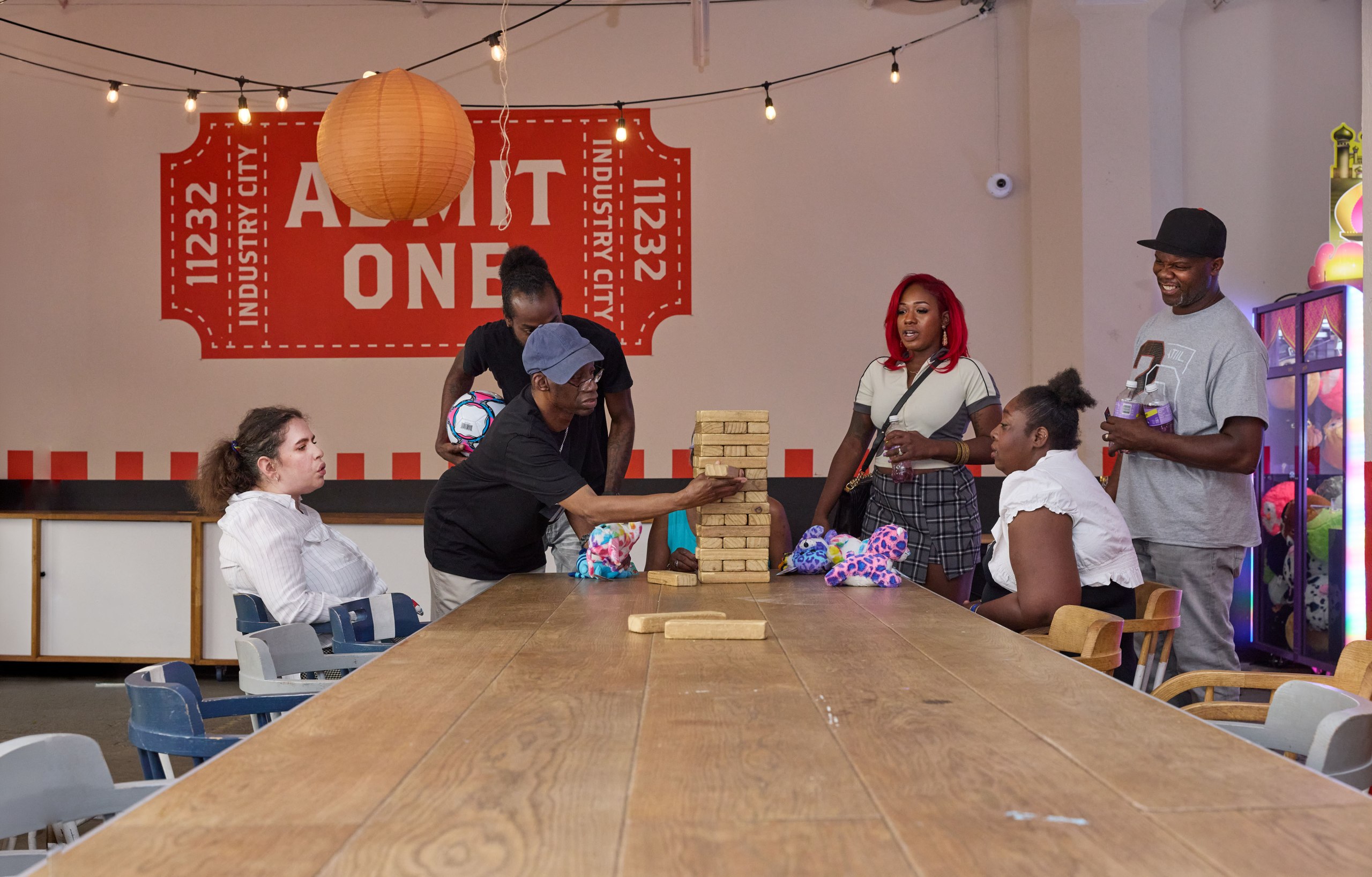
A: Absolutely! Because DHWOW is a community-based program, our space at Industry City serves primarily as a launchpad and meeting hub rather than a traditional classroom; the true magic of our program happens out in the neighborhoods we explore. To help us customize your visit, we ask that your Care Manager submit your initial referral documents ahead of time. Once we review your packet, we will invite you and your support team in for a personal tour and intake meeting. Following a successful introduction, we will schedule one full trial day so you can experience our daily rhythm, meet peers, and see firsthand if NeuSpark is the right fit for you.
-
A: No, the trial day is not mandatory. After successfully completing Step 1 (Connect & Share) and Step 2 (Review & Match), we offer this trial day purely as a way to give you a chance for a real, hands-on experience before making your final decision.
-
A: Safety and personalized support are our top priorities. To ensure everyone receives dedicated attention while navigating the community, our activities are hosted in small, tight-knit groups with an average ratio of four to five participants per staff member. Every team member undergoes a rigorous onboarding process prior to hire, including background checks and full safety clearances. Staff complete all OPWDD-mandated certifications, an intensive NeuSpark orientation, and specialized community-safety training (including transit and travel training). Our team also regularly attends advanced seminars and developmental events to ensure the highest standard of care.
-
A: Our program HUB location is located at 33 35th Street, Bldg #5 in Industry City, Brooklyn and runs Monday though Friday, 9:00am to 3:00pm. We encourage arriving around 8:30am to give you time to meet the staff, connect with their peers and choose their activity for the day (For more information, see the Community Integration & Daily Activities section below).
-
A: DHWOW focuses on community exploration, inclusion, and bringing personal goals to life through real-world experiences across NYC. We actively build partnerships with local nonprofits, the Brooklyn Chamber of Commerce, and Industry City businesses. Every activity is chosen to support personal growth and spark social opportunities. Instead of traditional academics, participants engage in active community experiences. Examples include joining a weekly book club at the Sunset Park Library, exploring new neighborhoods using Google Maps, volunteering at local senior centers or animal rescues, practicing outdoor yoga on the Industry City lawn, and taking art tours at The Met.
-
A: Yes, participants choose their own activities! The program offers a daily menu of options across Industry City and the five boroughs. Because groups depart directly into the community, activity sign-ups are filled on a first-come, first-served basis. While most daily activities are completely open choice, certain specialized tracks—like working in our art studio—are arranged in advance based on shared goals and interests. We also feature set weekly and monthly milestones, such as recurring volunteer days at a neighborhood food pantry or workshops with music consultants. Please note that we do not follow a traditional school calendar; we remain open year-round and only close for major federal holidays.
Residential Services
-
A: Adults eligible for Office for People With Developmental Disabilities (OPWDD) residential services.
-
A: Timelines vary depending on documentation, approvals, vacancies, and home matching.
-
A: Yes, when an appropriate opening is available.
-
A: Absolutely. Families remain valued partners.
-
A: Openings depend on availability.
-
Person-centered planning
Community inclusion
Health & wellness
Choice and dignity
Highly trained staff
Skill development
-
A: The Certified Residential Opportunities (CRO) List is maintained by OPWDD and helps identify individuals seeking residential opportunities. Being on the CRO List allows OPWDD and provider agencies, including NeuSpark PDS, to consider an individual when an appropriate residential opening becomes available. Placement is based on assessed needs, priority, compatibility, and available vacancies—not solely on the date someone is added to the list.
-
A: The OPWDD Front Door process is the starting point for accessing many OPWDD services, including residential supports. During Front Door, individuals complete eligibility and assessment activities, learn about available services, and work with OPWDD and their Care Manager to identify appropriate supports. If residential services are a goal, completing the Front Door process and maintaining communication with the Care Manager are important steps.
-
A: NeuSpark PDS reviews referrals received through the appropriate OPWDD and Care Management channels. When a residential opportunity becomes available, referrals are reviewed for clinical appropriateness, compatibility with the home, and the individual’s support needs.